ROOT CANAL CARE

Endodontic Retreatment in Asheville, NC

If a root canal tooth hurts again or shows new infection, retreatment may give it a second chance. Dr. Calhoun explains your options clearly, in a calm office serving Asheville for over 30 years.
30+

Years in Asheville

UNC
Chapel Hill trained, 1995
Fee-for-service

We file your out-of-network claims

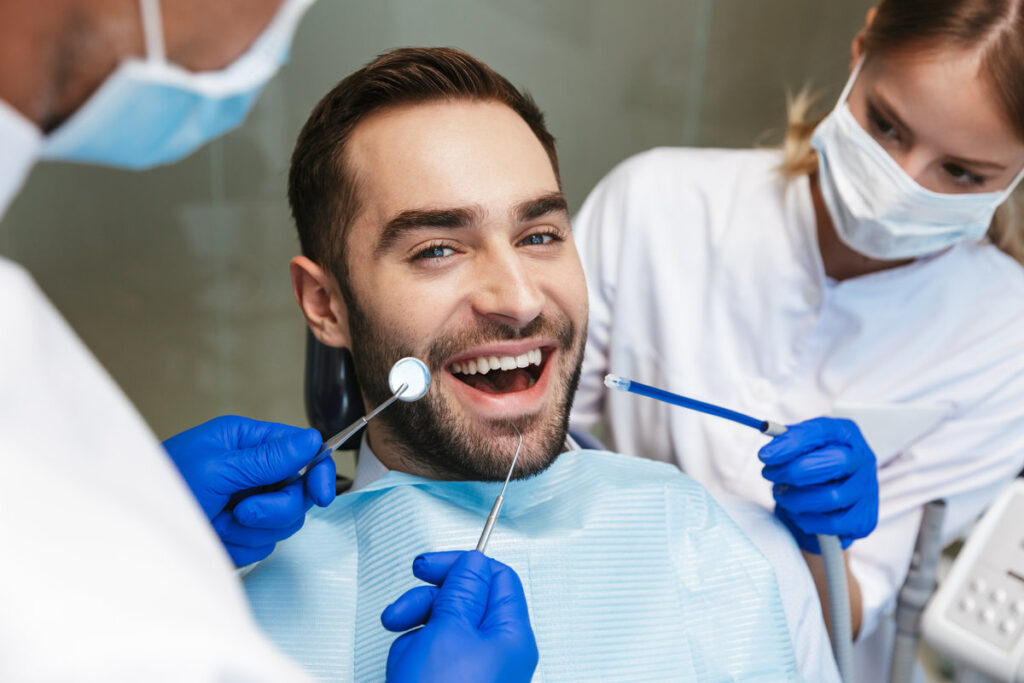
Image of a handsome happy young man sitting in medical dentist center. Looking at camera.

You had the root canal, got the crown, and moved on, so a familiar ache in that same tooth can feel discouraging. A treated tooth can become reinfected months or even years later, and the signs often look a lot like the original problem. The good news is that a failed root canal is not automatically a lost tooth.

At Travis J. Calhoun, DDS, root canal retreatment is part of the endodontic care Dr. Calhoun provides for patients across western North Carolina, where he has practiced since 1995. His first goal is to find out why the tooth is hurting again, and his second is to give you an honest recommendation about the best way to keep it.

What Is Root Canal Retreatment?

Root canal retreatment, sometimes called endodontic retreatment or a redo root canal, means reopening a tooth that has already had root canal therapy. The old filling material is removed from inside the roots, the canals are cleaned and disinfected again, and the tooth is resealed. It gives a previously treated tooth a second chance to heal instead of going straight to extraction.

A first root canal can fail for several reasons. Some roots have extra or curved canals that are hard to find and clean, new decay or a crack can let bacteria back in, and a crown placed long after treatment can leave the canals exposed in the meantime. Over many years, the original seal can also break down.

Signs a Root Canal Has Failed

A reinfected tooth does not always hurt right away, which is why regular X-rays matter. These are the signs that most often bring patients in for a retreatment evaluation.

  • Returning pain: an ache or throb in a tooth that already had a root canal.
  • Tenderness when biting: soreness when you chew or tap on the treated tooth.
  • Swelling or a gum bump: a pimple-like bump, drainage, or swollen gums near the root.
  • X-ray changes: a dark area around the root tip that grows between visits.

Any one of these is worth an evaluation, even if the tooth has felt fine for years.

What Happens During Root Canal Retreatment

Retreatment follows a careful sequence, and each step depends on what we find inside the tooth. Here is what most patients can expect from start to finish.

The Evaluation

We start with updated digital X-rays and a close exam to look for cracks, new decay, and signs of infection around the root. If the tooth has a fracture below the gumline or too little bone support, retreatment may not be the right choice, and we will tell you that before any work begins.

The Retreatment Procedure

After the area is numb, the crown or filling on top is removed or opened to reach the canals. The old filling material is taken out, the canals are cleaned, reshaped, and disinfected, and the tooth is sealed again. Some cases need medication placed between two visits so the infection can settle before the final seal.

Root canal retreatment has a solid track record. A 2025 systematic review of 30 clinical studies, published in Cureus, found success rates from about 61% to 94% across studies, and smaller infections at the root tip tended to heal more often.

Recovery and Your New Crown

Mild soreness for a few days is common, and over-the-counter pain relief usually handles it. Getting a permanent dental crown placed soon afterward matters, because it seals the tooth against new bacteria, and follow-up X-rays let us confirm that the area around the root is healing.

Retreatment, Apicoectomy, or Extraction?

Retreatment is usually the first option for a failed root canal, but it is not the only one. When the problem sits at the very tip of the root, or when a post or crown makes the canals hard to reach, an apicoectomy may treat the infection from the root end instead.

If a tooth is cracked through or cannot be restored, tooth extraction may be the healthier path. A missing tooth can then be replaced with a bridge, a denture, or an implant, and Dr. Calhoun restores dental implants once a specialist places them. Saving the natural tooth is usually less involved, so we walk through every option before you decide.

Why Patients Trust Dr. Calhoun With Retreatment

Retreatment calls for patience and a close look at what went wrong the first time. With more than 30 years of experience in Asheville, Dr. Calhoun takes the time to read your X-rays, explain what he sees, and tell you whether the tooth can be treated in our office or whether a complex canal system calls for an endodontist. You get a straight answer either way.

Our fee-for-service model means recommendations are based on what your tooth needs, not on insurance rules. We file claims on your behalf so you can use out-of-network benefits, and we offer CareCredit and Cherry financing for patients who want to spread out the cost.

Root Canal Retreatment FAQs

Common signs include pain or tenderness returning in a tooth that already had a root canal, swelling or a small bump on the gum near the root, and a dark spot around the root tip on an X-ray. Some failures cause no symptoms, which is why follow-up X-rays matter.
Research reviewing 30 clinical studies found success rates from about 61% to 94%, with smaller infections at the root tip healing more often. Dr. Calhoun will explain your tooth’s specific outlook after the evaluation.
When the tooth can be restored, keeping it is often simpler and less costly than extraction followed by a bridge, denture, or implant. If the tooth is cracked through or lacks bone support, extraction may be the healthier choice.
Many cases take one or two visits. When an infection needs time to settle, medication is placed inside the tooth between appointments before the final seal and crown.
Most patients find it feels similar. The area is fully numbed, and any soreness afterward usually fades within a few days with over-the-counter pain relief.
If the canals cannot be reached or the problem is at the root tip, an apicoectomy may treat the infection from the root end. If the tooth cannot be saved, we will talk through extraction and replacement options.

Save Your Tooth With Travis J. Calhoun, DDS

Dr. Travis Calhoun grew up in Asheville, trained at the University of North Carolina at Chapel Hill School of Dentistry, and has spent more than 30 years helping patients keep their natural teeth. He completes around 30 hours of continuing education each year and runs a relaxed, unhurried office where every question gets an honest answer.

If a tooth that already had a root canal has started to ache, swell, or feel tender again, waiting rarely helps. Contact our office to schedule a retreatment evaluation, and we will help you find the best way to save your tooth.

Questions about payments and financing options? Give us a call at (828) 277-2722.

Dr. Travis Calhoun, DDS

Meet Dr. Travis Calhoun, DDS

Dr. Travis Calhoun has been treating patients throughout Asheville and western North Carolina for over 30 years. A born-and-raised Asheville native, he studied at the University of Georgia before completing his dental training at the University of North Carolina, Chapel Hill, and has run a fee-for-service family practice here ever since. Patients trust his unhurried, detail-oriented approach to every treatment plan.

"It is my mission to treat everybody like they were my mom. I want to keep my skills at the absolute highest level so I can deliver the best dental care available, in a relaxed, laid-back atmosphere."

Learn more about Dr. Calhoun