

What Is a Dental Crown and When Do You Actually Need One?
If your dentist has ever mentioned the word “crown,” your first thought was probably something along the lines of: ” How bad is this, and do I really need it? It’s a fair question. Crowns are one of the most commonly recommended restorative treatments in dentistry, but a lot of people walk out of appointments still fuzzy on what they actually are, why they’re needed, and what the process looks like.
At the office of Dr. Travis Calhoun, DDS, we’ve been helping patients in Asheville and across western North Carolina navigate those exact questions since 1995. Whether you’re here for a routine cleaning or dealing with a tooth that’s been giving you trouble, our dental services are designed with your full picture of health in mind, not just the problem in front of us. Crowns are a big part of what we do, and we want you to feel informed before you ever sit down in the chair.
What a Dental Crown Actually Is
A crown is a tooth-shaped cap that fits over a damaged or weakened tooth. Think of it as a protective cover. Once it’s placed, it restores the tooth’s shape, size, strength, and appearance. From the outside, it looks and functions like a natural tooth.
Depending on the location of your damaged tooth, crowns can be made from several materials, including porcelain, ceramic, and metal alloys. For most patients, the goal of a crown is to blend in with surrounding teeth, and these modern materials make that very possible.
How the Process Works
Getting a crown typically takes two visits. At the first appointment, we prepare the tooth by removing a small amount of structure to make room for the crown, take impressions (or a digital scan), and place a temporary crown while your permanent one is being made. At the second visit, the permanent crown is fitted, adjusted, and cemented into place. If you’re getting ready to come in for the first time, our new patient information page walks you through what to expect before your visit.
At the office of Dr. Travis J. Calhoun, we use digital intraoral scanning technology, which means a more comfortable, accurate experience without the traditional putty impressions most people dread.
When Do You Actually Need a Crown?
This is the part most patients really want to know. The short answer: a crown is typically recommended when a tooth is damaged, weakened, or compromised in a way that a filling alone can’t adequately restore. There are several specific situations where a crown is the right call.
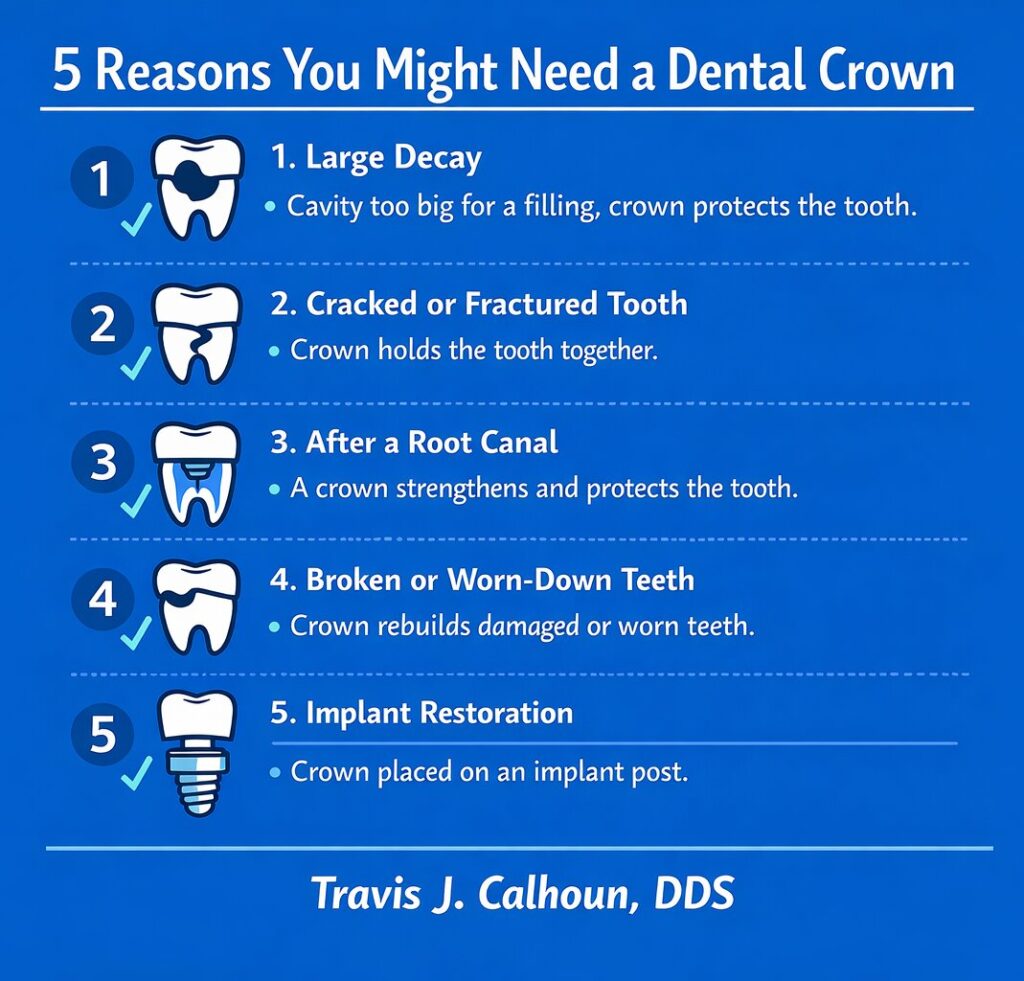
Here are the most common reasons a crown may be recommended:
- Large decay: When a cavity is too extensive for a standard filling to hold, a crown provides full coverage and protects what remains of the natural tooth.
- Cracked or fractured tooth: A crack can spread over time and eventually lead to a split or loss of the tooth. A crown holds the tooth together and prevents further damage.
- After a root canal: Teeth that have had root canal treatment are more brittle and prone to fracture. A crown restores strength and protects the treated tooth.
- Broken or worn-down teeth: Years of grinding, biting down on hard foods, or a sudden trauma can leave a tooth structurally compromised. A crown rebuilds it.
- Implant restoration: When a specialist places a dental implant, a crown is what sits on top and functions as the visible tooth. We handle the crown and restoration side of that process.
Every situation is a little different, and a thorough exam is always the first step. The American Dental Association released updated guidelines in 2023 recommending conservative approaches to treating tooth decay that preserve as much natural tooth structure as possible, which aligns closely with how we approach treatment decisions here.
What to Expect in Terms of Comfort and Recovery
One of the most common concerns patients raise is whether getting a crown will hurt. The procedure itself is done under local anesthesia, so the tooth and surrounding area are numb during the appointment. Some mild soreness or sensitivity in the days following is normal, but for most people it’s manageable and fades quickly.
Once the permanent crown is placed, it should feel natural. If something feels off in your bite, or if sensitivity lingers longer than expected, let us know. Those are easy adjustments to make. Our goal is always for you to leave feeling good, not just done.
How to Care for Your Crown
Crowns don’t require any special maintenance beyond what you’re already doing for your natural teeth. Regular brushing, flossing, and routine visits keep the tooth underneath healthy and the crown in good shape. If you’re a grinder, we may recommend a nightguard to protect both your crowns and your natural teeth from wear over time.
With proper care, a well-placed crown can last for many years. It’s a long-term investment in keeping your tooth functional and pain-free. We’re also happy to walk you through payment and financing options to make sure cost doesn’t stand between you and the care you need.
Your Tooth Deserves a Second Chance. Dr. Travis Calhoun Can Help.
Dr. Travis Calhoun has been caring for patients in Asheville since 1995, with a philosophy rooted in treating the whole person, not just the tooth. He puts it plainly: his mission is to treat every patient like he would treat his own mom. That means honest recommendations, skilled care, and a relaxed atmosphere where you actually feel comfortable asking questions.
If your dentist has mentioned a crown, or if you’ve been putting off a tooth that’s been bothering you, now is a good time to get it looked at. Dr. Travis and our team are here to give you a clear picture of what’s going on and what your options are. Request an appointment today, and let’s take care of it together.