
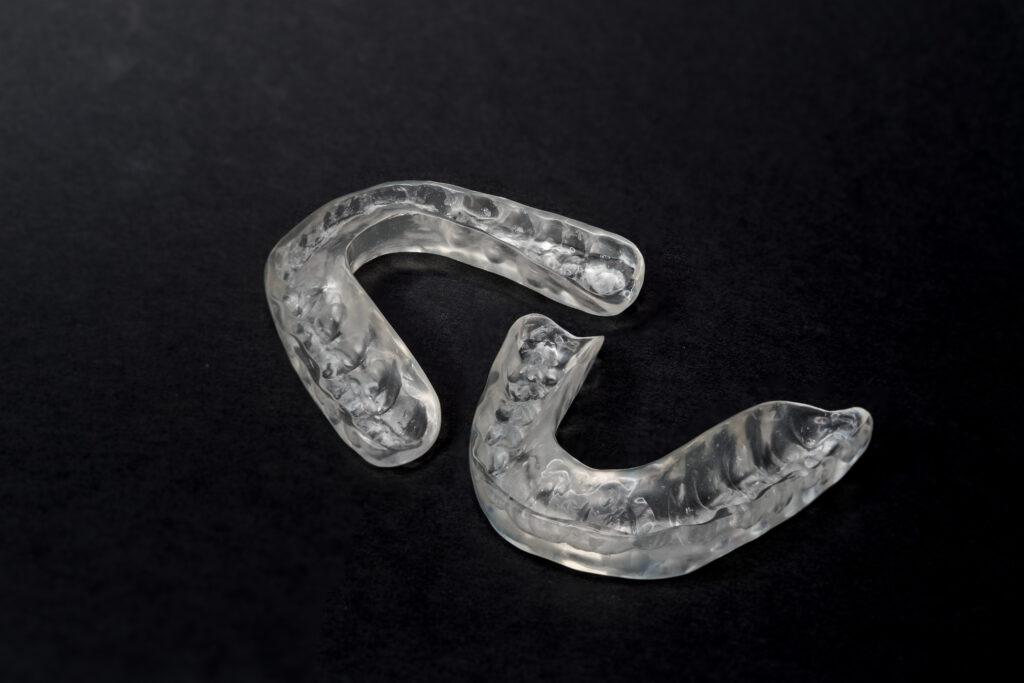
What Is a Nightguard and How Do You Know If You Need One?
You wake up with a dull ache in your jaw, a headache that seems to come out of nowhere, or a tooth that suddenly feels sensitive to cold water. None of it seems connected until your dentist points to the flattened edges on your back teeth and asks if anyone has ever mentioned that you grind your teeth at night.
At Travis J. Calhoun, DDS, we hear this story often, and a nightguard is usually the easiest way to stop the damage before it gets worse. If you have been waking up with a sore jaw, morning headaches, or teeth that look more worn down than they used to, this guide will walk you through what a nightguard actually does and how to tell if you might need one.
What Is a Nightguard?
A nightguard is a custom-fitted piece you wear over your teeth while you sleep. Some people call it an occlusal guard or a bite splint, but the idea is simple. It sits between your upper and lower teeth so grinding and clenching, a habit dentists call bruxism, cannot chip away at your enamel or wear out your jaw.
A good nightguard should feel snug but not tight, and you should still be able to breathe and swallow normally with it in. The drugstore versions tend to feel bulky and can slip out of place overnight, which is one reason we like making yours to fit your bite exactly. A nightguard will not stop you from grinding, but it does take the brunt of the force so your teeth do not have to.
The National Institute of Dental and Craniofacial Research points out that mouth guards are commonly recommended to keep teeth separated, which helps prevent damage and may even calm down some of the muscle activity behind the grinding itself.
Signs You Might Need a Nightguard
Bruxism can be sneaky because it usually happens while you sleep, so you might not even know it’s happening. A lot of people only find out after a partner mentions hearing grinding sounds, or after a dentist spots the wear during a routine visit.
Here are a few of the more common signs worth mentioning at your next appointment:
- Jaw soreness: Waking up with tightness or aching around the jaw muscles, especially near the ears
- Morning headaches: A dull, tense headache that is worse first thing in the day
- Tooth sensitivity: New sensitivity to hot or cold that was not there before
- Visible wear: Flattened, chipped, or cracked edges on your back teeth
- Cracked restorations: Crowns, fillings, or veneers that keep loosening or breaking
If a few of these sound familiar, bring them up at your next exam and cleaning so we can take a look at your bite and how your teeth are wearing.
What Happens if Bruxism Goes Untreated
Left alone, grinding tends not to stay the same. It usually gets worse, and the damage adds up. Enamel that has already worn away will not grow back, so what you see today is often the mildest version of what is coming.
Untreated bruxism can lead to bigger restorative dentistry down the road, including teeth that crack and need custom crowns or, in tougher cases, root canal therapy once grinding wears through to the inner tooth. Catching it early with a nightguard is almost always simpler and easier on your wallet than fixing the damage later.
How We Approach Nightguards
We keep things simple and low-pressure. During your visit, we take a look at your bite, check for wear patterns, and talk through whatever symptoms you have noticed before recommending anything.
We also keep an eye on your gum health along the way. Our practice has built a strong periodontal side with two excellent hygienists on staff, and healthy gums matter just as much as protected enamel when it comes to a comfortable, lasting bite. If clenching has been giving you jaw tension or TMJ discomfort, we will talk through that too, as a nightguard is often just one piece of a bigger plan for jaw comfort.
Schedule a Visit With Travis J. Calhoun, DDS
Dr. Travis has been practicing in Asheville for nearly three decades, and his approach has always been to treat the whole person, not just the symptom sitting in the chair. That means a nightguard conversation usually includes a look at stress, sleep habits, and overall oral health, not just a quick mold and a follow-up visit.
If you have been waking up with jaw pain, headaches, or teeth that feel more sensitive than they used to, do not wait around for it to get worse. Our team at Travis J. Calhoun, DDS has helped patients across western North Carolina protect their smiles with custom-fitted nightguards, and we would love to take a look at your bite and talk through your options. Contact us today to schedule an exam and find out if a nightguard is the right next step for you.